An ongoing project
Xeniteia
(Greek: ξενιτεία; Latin: peregrinatio)
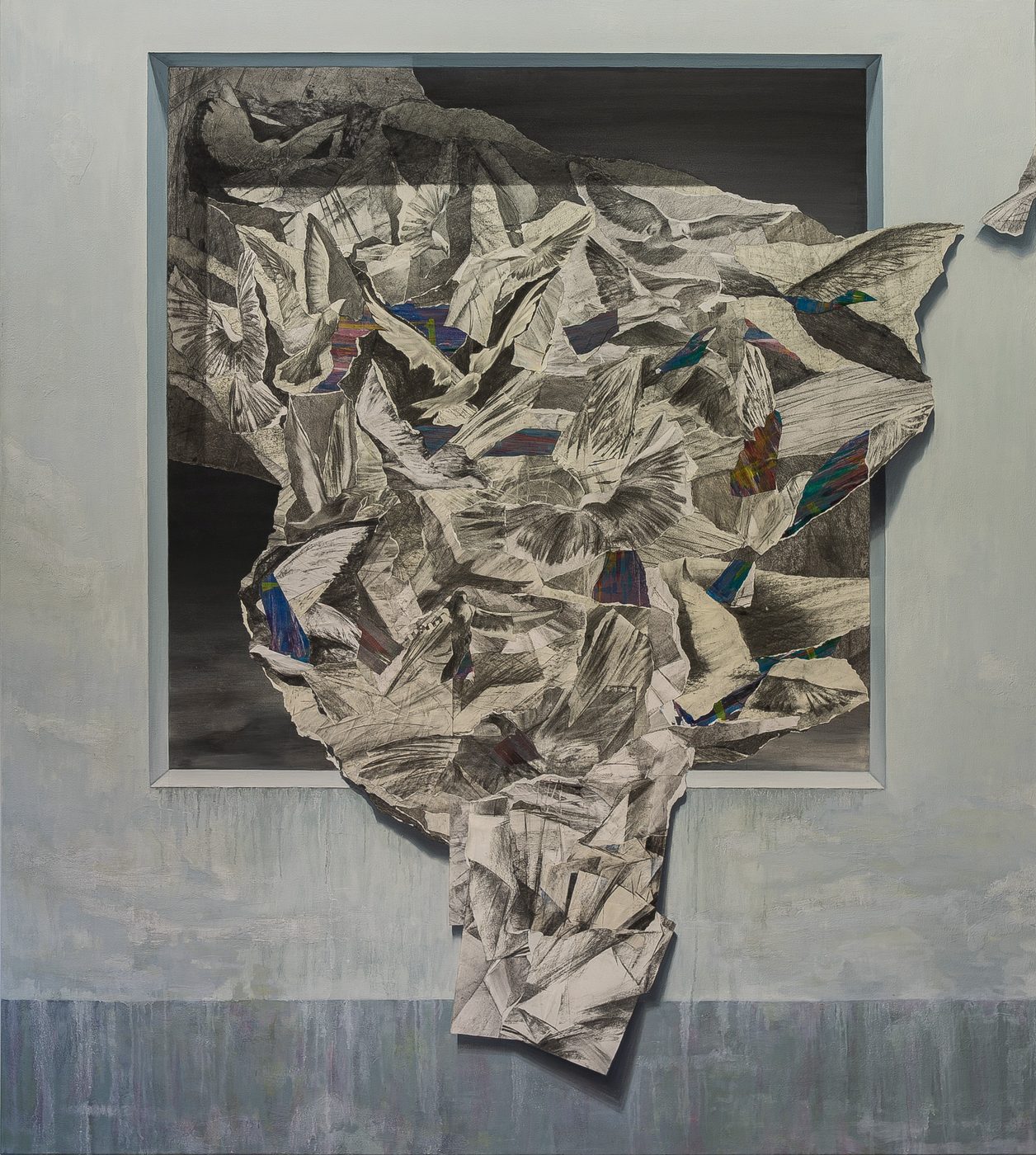
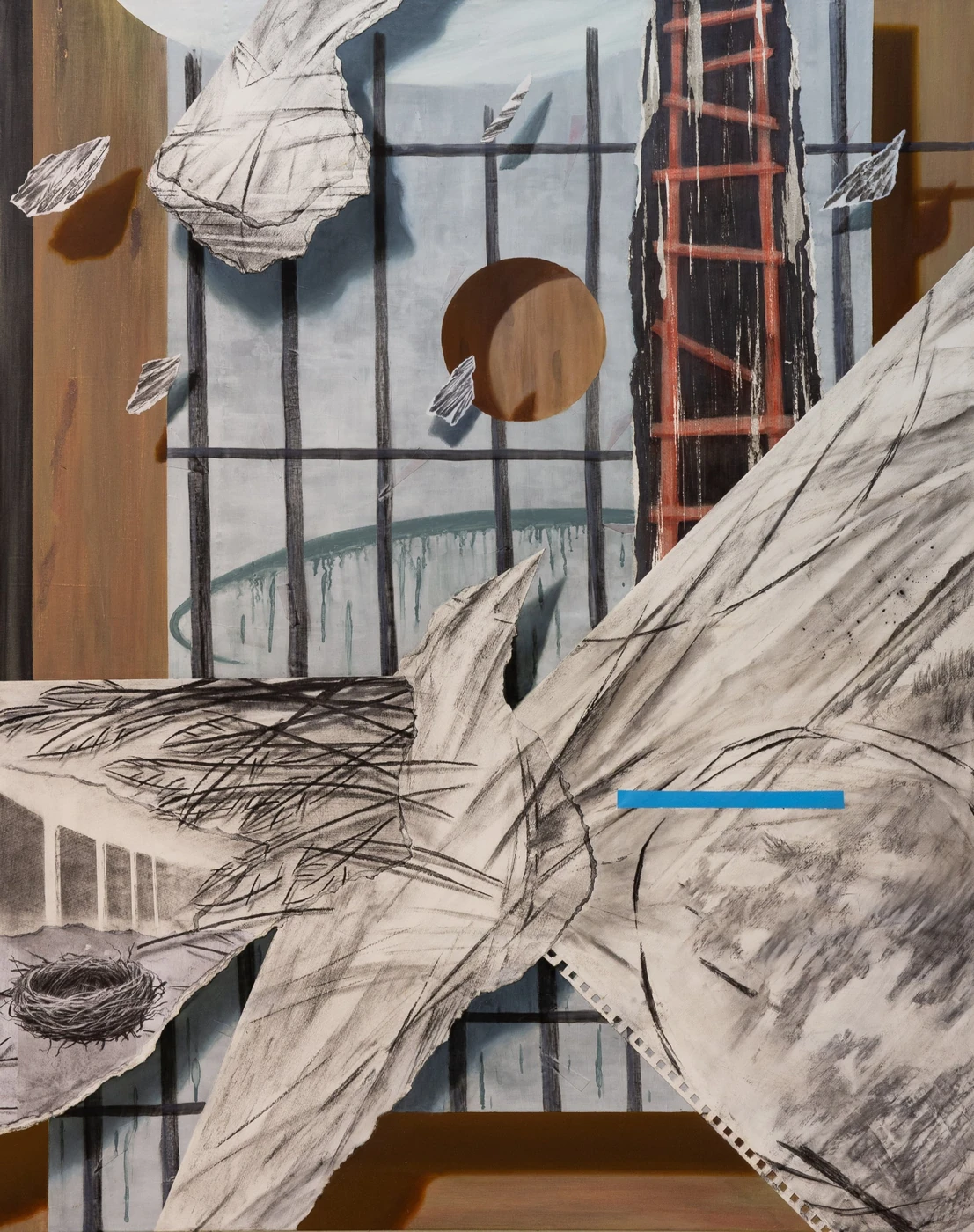
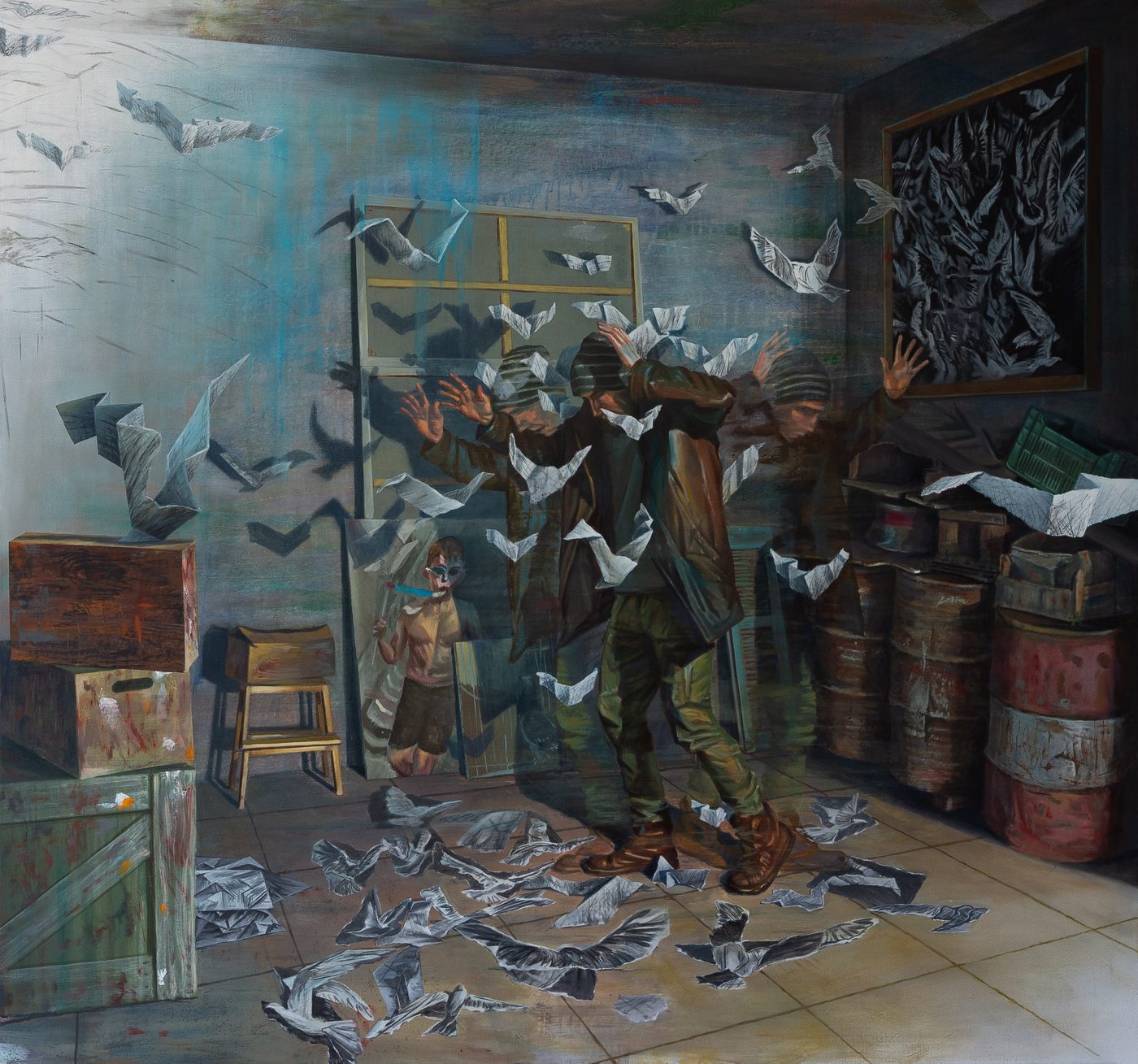
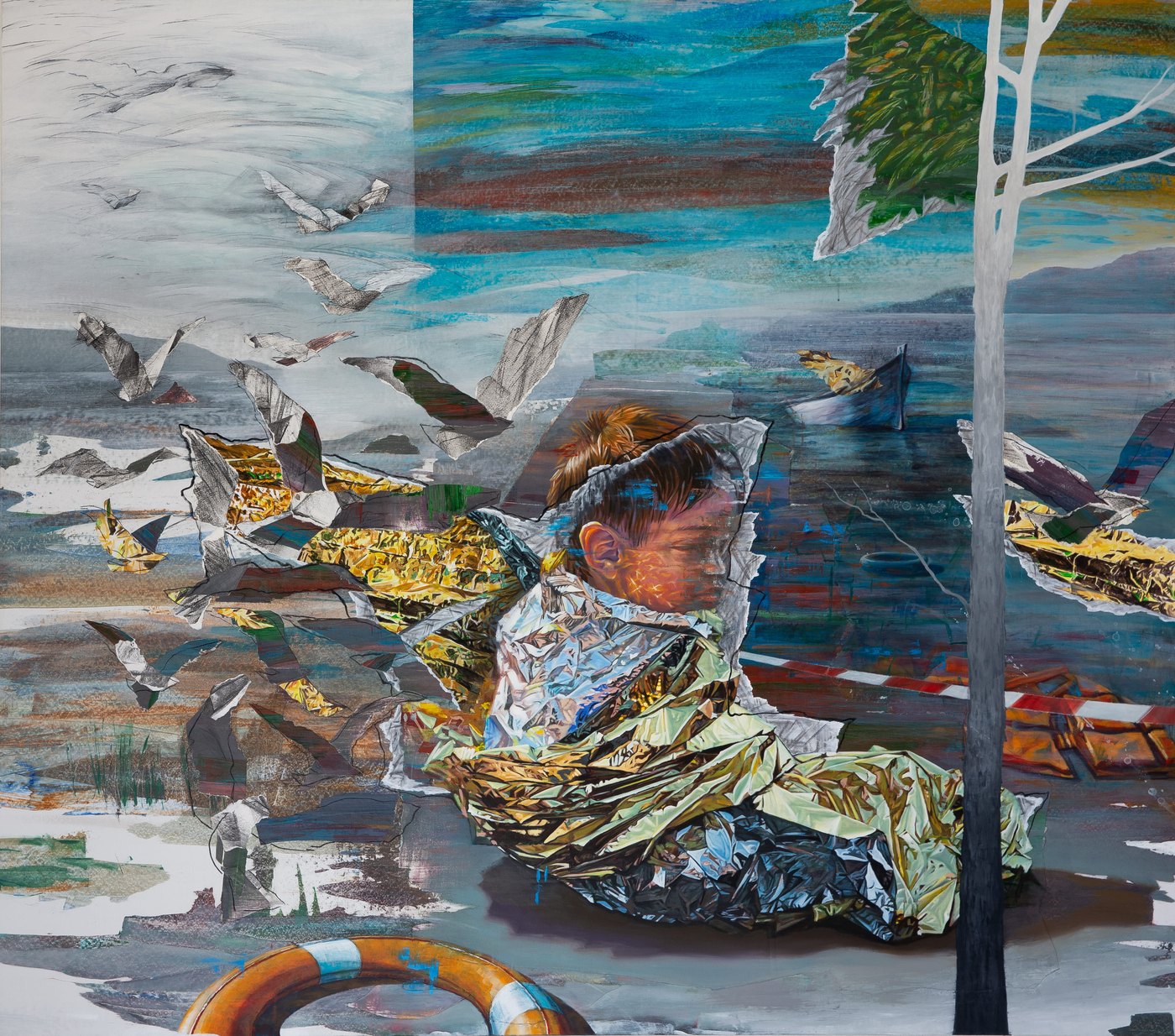
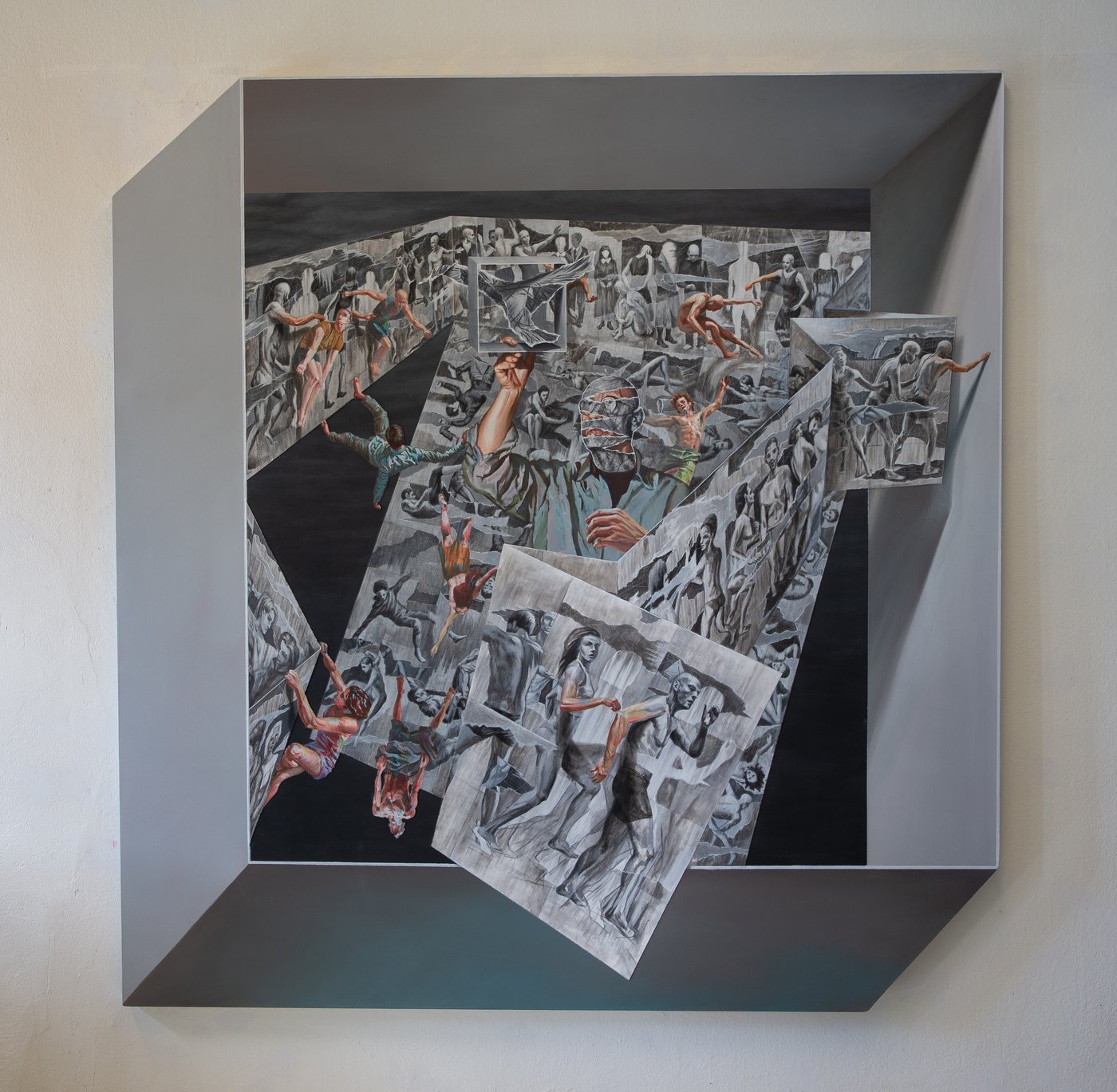
Paint performs as paper, paper transforms into birds, and the painted image appears to extend beyond its limits.
These transformations mirror a state of departure that does not end in arrival; rather, it is a quest for a redefinition of identity.
Exodus
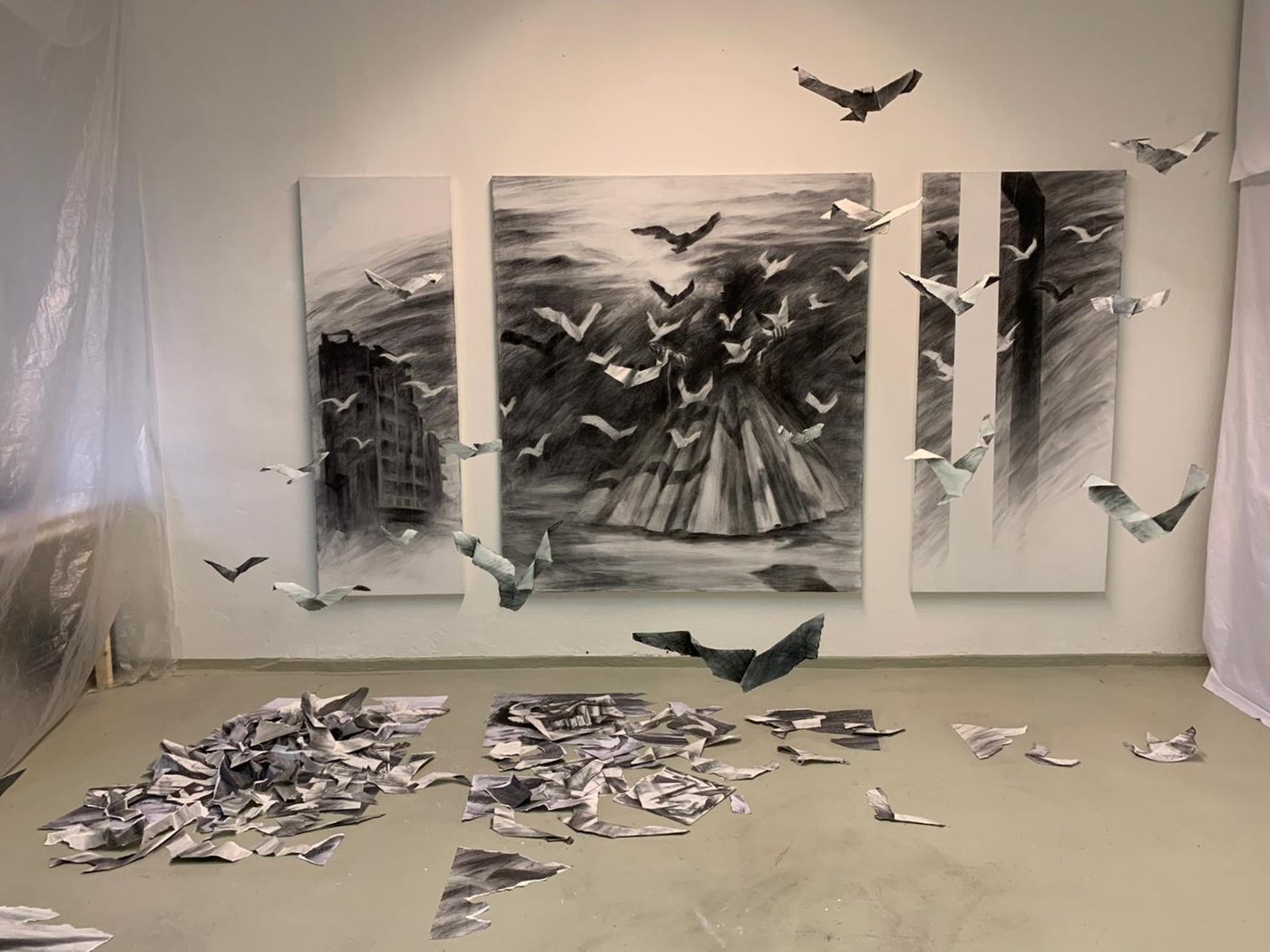
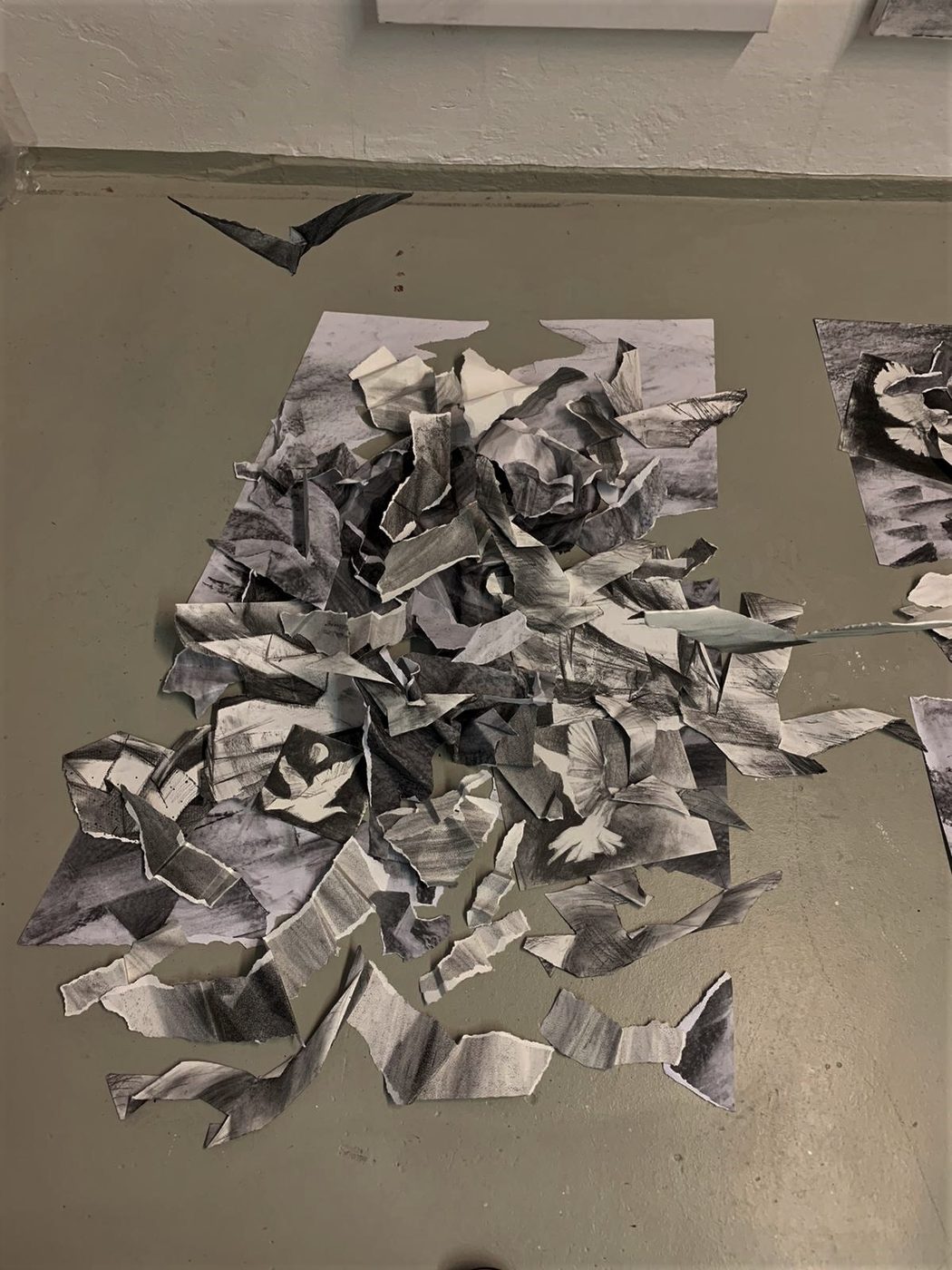
Where the project begins: charcoal drawings are torn from the paper and enter the room.
Exodus in the studio · 49 seconds
From an early age I felt a particular admiration for migratory birds. Evros, in north-eastern Greece, where I grew up, is in fact a place that countless species pass through or stay in, season after season.
Storks and swallows were the angels of the seasons, their messengers. I was struck by the fact that they lived for a time in different parts of the world and travelled thousands of kilometres away. Their ability to move beyond the limits of a single place gave me the sense that the conditions of life are not fixed, and the hope that their limits can be widened.
Later, when I moved to larger cities, I was captivated by the moment when, as I walked through a square, a whole flock of pigeons would suddenly rise, like a sigh of relief, as if it carried away the weight of everyday life. The flocks formed shapes in the air of the city, changing its rhythm.
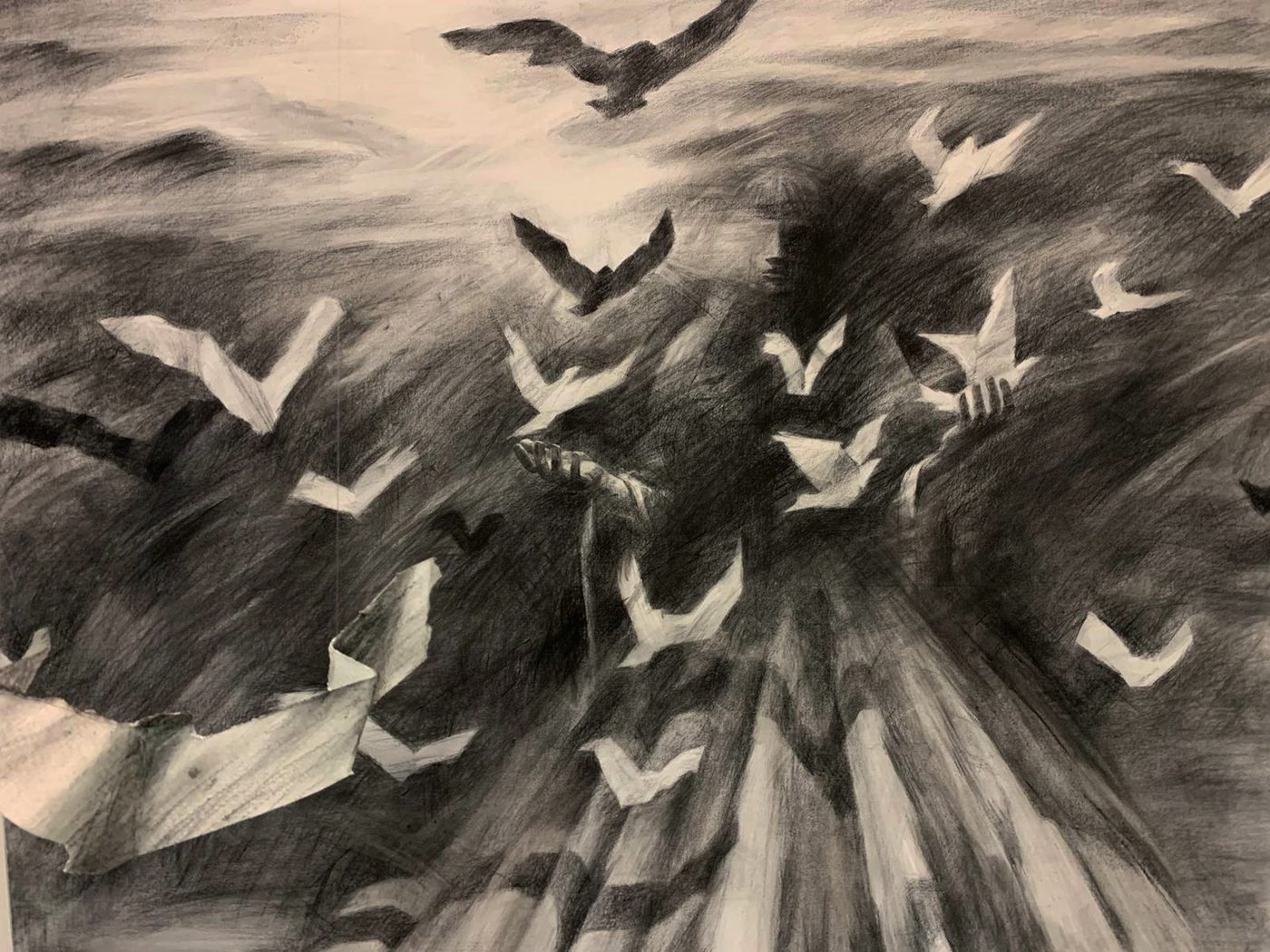
Shortly before my biggest and most difficult departure, the one to Berlin, I often noticed birds circling around me. Perhaps it was the season, or perhaps I was looking up at the sky more often; either way, they gave me the feeling that they were accompanying my flight. At that time I was preparing my degree project. Searching for hope, I began to make various drawings. There, the personification of the hope I was looking for (in Greek, hope, elpida, is a feminine word) began to take shape: a female figure with indistinct features, surrounded by abstract birds that seemed to be formed from torn paper, some dark, some light, with uncertain folds. The figure and the birds around her seemed to be searching for a way out, towards the light.
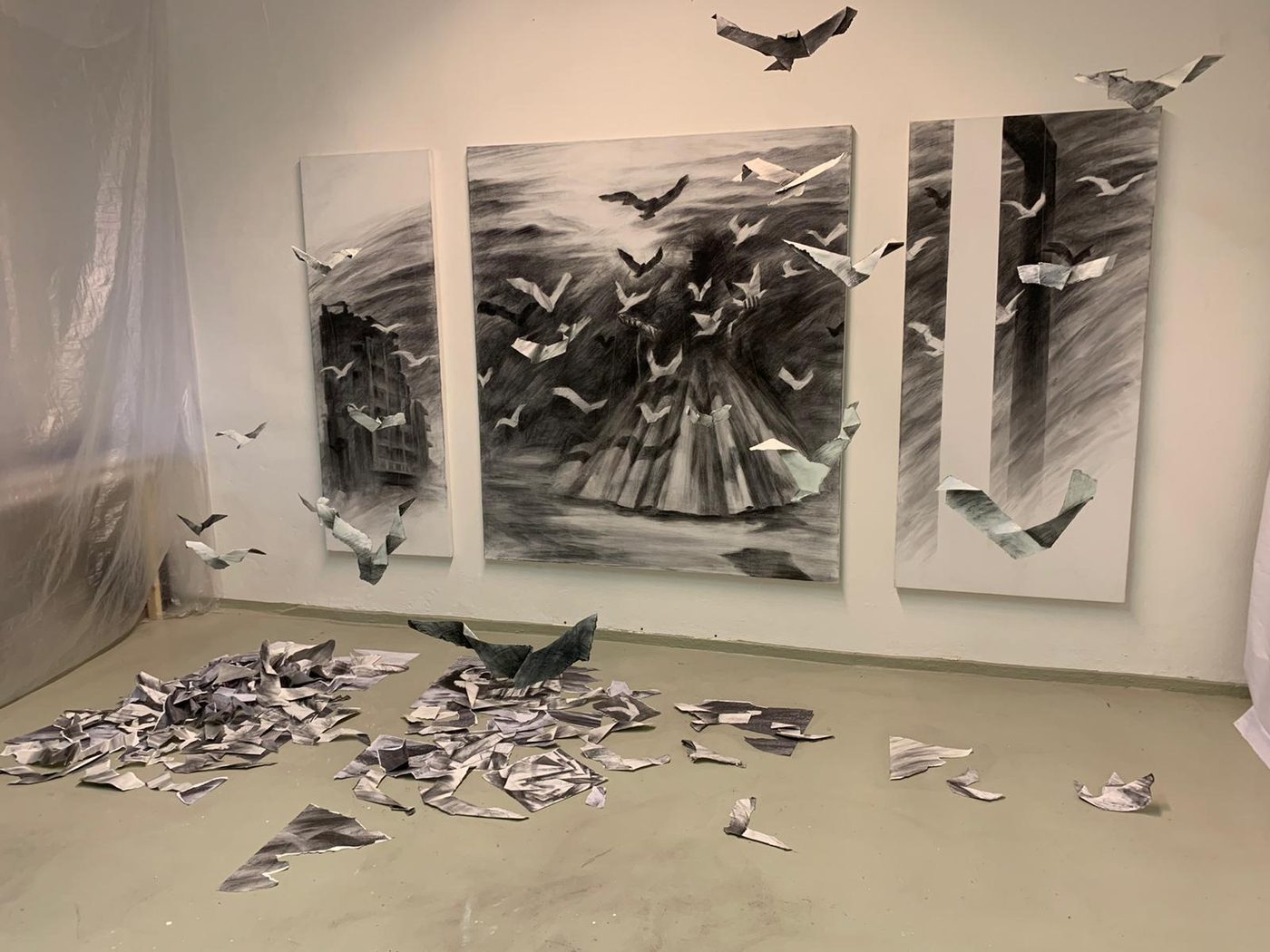
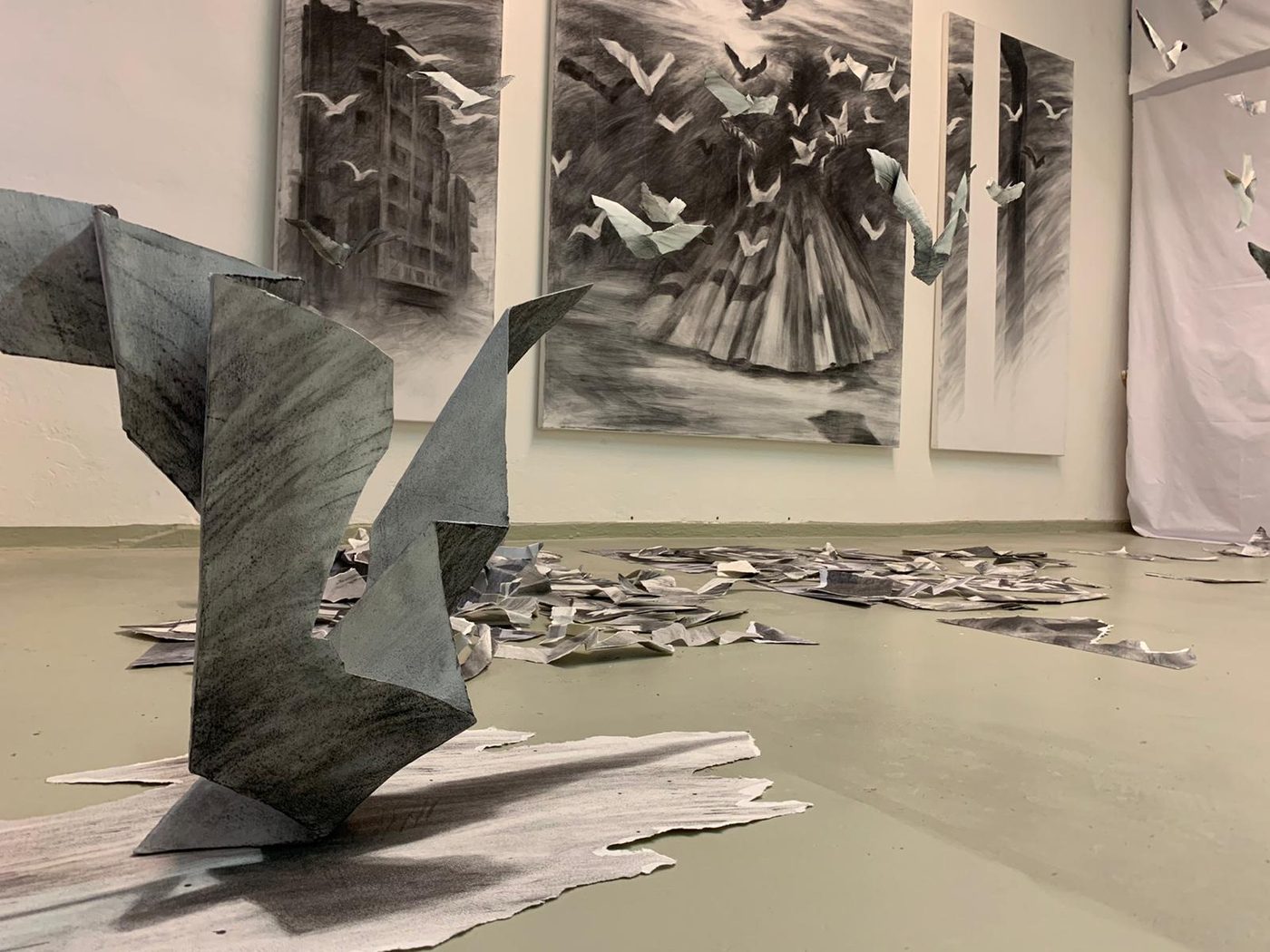
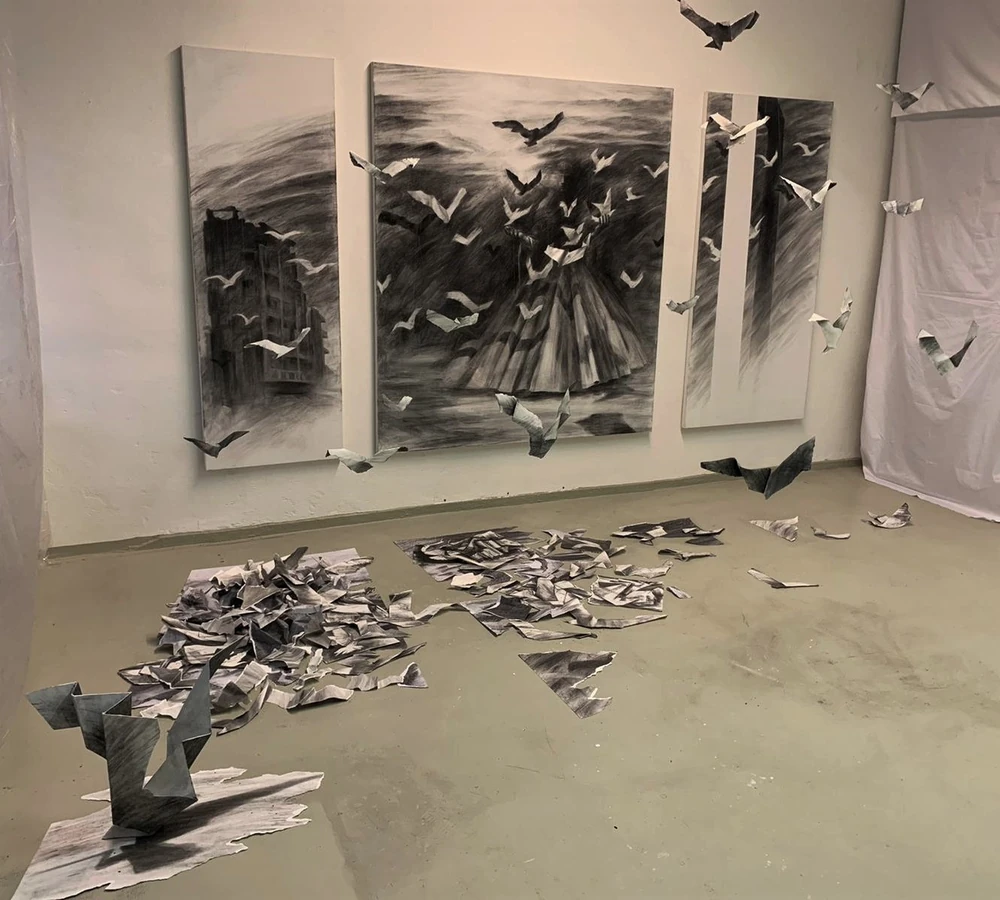
As the drawing became clearer, I decided that it had to be large enough to approach the scale of physical reality. After some experimentation I found a type of canvas that was the ideal surface for the gradations of charcoal tone I needed. I chose to work exclusively in charcoal because it gave the drawing immediacy at this scale, and because it expressed the indistinctness of the face and the birds, and above all the dreamlike atmosphere I wanted, avoiding any distraction from colour. I then added two more canvases, to the right and to the left, extending the image. The gaps between the canvases worked like pauses in a melody. Although they contained no painted image, they took part in the composition and allowed the real space to become part of the work.
Years later, in Berlin, looking at the preliminary sketches on paper that I had made to find out how to draw the birds, I thought that they could become part of the work. So I began tearing them, and then tearing sheets of card to make three-dimensional versions of the triptych’s birds. Some I drew on before tearing, others after. I began hanging them with fishing line in front of the triptych, as if they were part of the drawing. In this way the three-dimensional birds extended the image beyond the surface of the canvases, and their presence in the room changed the relationship between the drawing and the viewer’s real surroundings. I also noticed that the relationship could be visually reversed: the drawings now seemed to emerge from the three-dimensional constructions, as if those had come first. This would later become a way of working in other pieces as well.
Later I extended the work onto the floor, with sheets of card that follow the perspective of the gaps in the triptych and diminish in number and size as they move away from it. The canvases, in turn, continue onto the floor as sheets of paper that widen as they move away, as if projected into the room. This is the reverse perspective of icon painting, where the organisation of space strengthens the direct relationship between the image and the viewer. Finally, I added a paper construction of a bird, like a sculpture, on the floor. In a sense it marks the boundary of the work: it gives the impression of the moment all the birds take flight, but it also signals the end of the installation.
In this way the search for a personal way out led to a visual investigation of the very idea of exodus, which gradually took on a form and an existence of its own. The exodus had taken its first steps.
The work then began to give rise to others. In Passage, drawn birds burst in through an opening and cast shadows, as if they had volume. From this work onwards I began to allow colour, gradually and sparingly.
In A Stranger, one of the birds turns into a child, raising the question of the reasons for its journey. In Between gathers the whole process into a single image: the making of the birds and their exodus into real space, here achieved through painting alone. It brings out the in-between state of every transition, from the old to the new, and from reality into a work of art.
The idea has never stopped evolving. Each new work interprets an earlier one, prompts the next and extends the whole. Something similar happens in life: experiences and changes redefine the way we see the world and ourselves.
This is also how the title Xeniteia came about. Xeniteia is a patristic term, referring to a voluntary departure from comfort, from the familiar and from the dependencies it brings, in search of meaning, of the true self and of God. In this project two departures from the familiar meet: a personal one, in search of new possibilities of growth, and a visual one, in search of solutions that go beyond two dimensions. The title serves as their common frame.
Unfolding